Slab Leak Repair in Atascocita, TX
Under-slab water line failures threaten the integrity of concrete foundations across northeast Harris County. We locate hidden sub-slab pipe fractures accurately and deliver long-lasting repair solutions.
Speak directly with a knowledgeable technician. Non-invasive diagnostics and transparent repair planning.
Understanding Slab Leaks in Atascocita Foundations
A slab leak occurs when the pressurized fresh water supply lines or drainage pipes installed beneath a concrete foundation slab burst, pinhole, or disconnect. In northeast Harris County communities like Atascocita, homes are constructed predominantly on concrete slab-on-grade foundations. Beneath these massive concrete structures runs a labyrinth of copper, galvanized steel, or polybutylene plumbing. When one of these conduits springs a leak, escaping water saturates the sub-base, erodes supportive soil, and generates upward hydrostatic pressure that compromises flooring and framing.
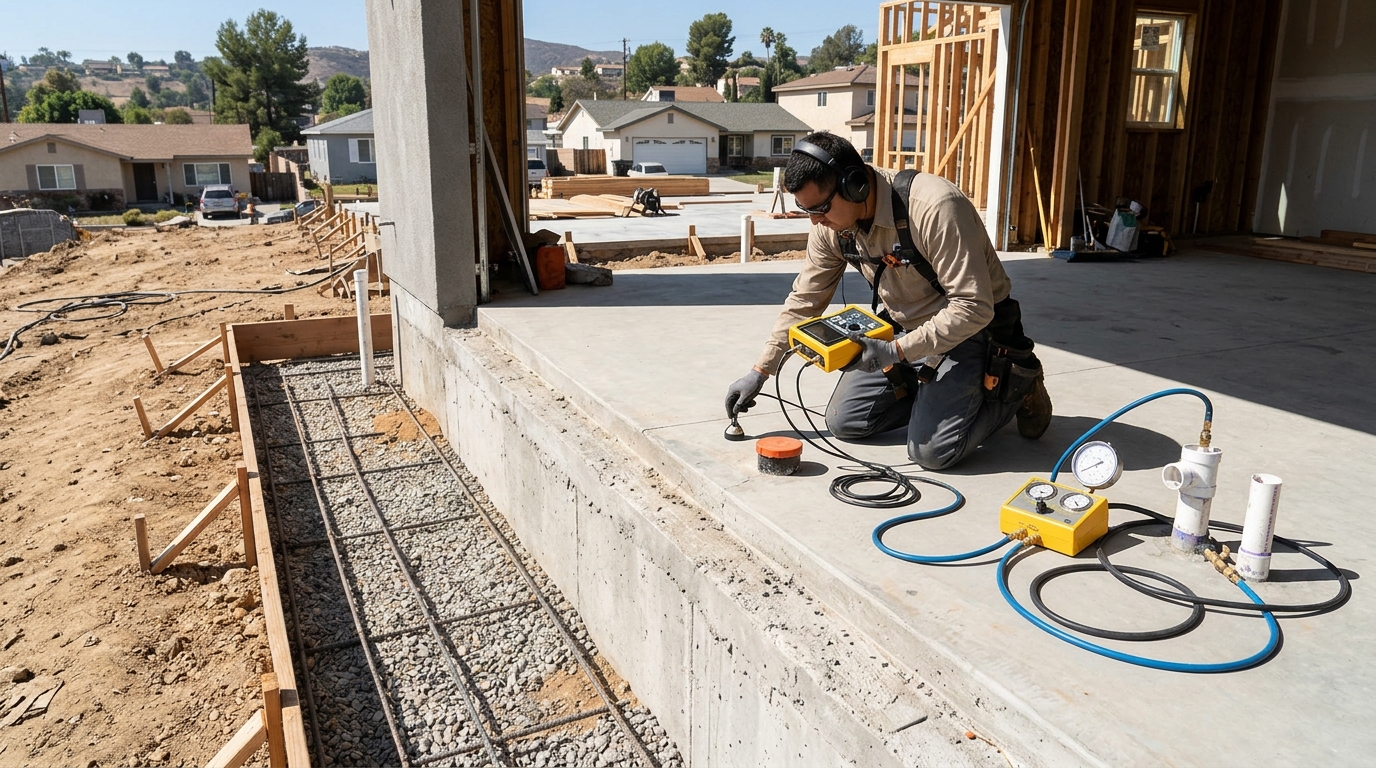
Detecting and fixing an issue with a skilled slab leak plumber Atascocita trusts is crucial before foundation heave or settling causes structural deflection. Because these pipes are encapsulated beneath inches of reinforced poured concrete and crushed limestone, early symptoms are subtle. Addressing a water leak under slab Atascocita homeowners encounter requires specialized acoustic listening discs, line tracers, and pressure gauges rather than destructive guesswork.
Suspecting an Active Leak Beneath Your Slab?
If your water meter is spinning continuously or you notice warm flooring in your hallway or kitchen, do not wait for foundation cracks to widen. Call our team immediately for direct assistance.
Call (888) 205-7875 NowWhy Atascocita Soil Conditions Trigger Under Slab Pipe Failures
The primary driver behind sub-slab plumbing failures throughout Atascocita and the greater Lake Houston basin is the notorious Gulf Coast gumbo clay. This expansive Beaumont and Lake Charles clay formation behaves like an accordion. During prolonged dry spells in hot Texas summers, the clay shrinks and pulls away from grade beams, leaving hollow voids beneath concrete slabs. Conversely, during periods of torrential Gulf moisture, tropical storms, and flash flooding, the clay swells forcefully, exerting tremendous upward and lateral pressure against building footings.
This perpetual cycle of ground shifting places extreme shear stress on rigid copper tubing embedded beneath or through the slab. Furthermore, many subdivisions constructed between the late 1960s and 1990s around FM 1960 and West Lake Houston Parkway feature soft copper lines that directly contact abrasive aggregates without protective sleeving. Over decades, thermal movement from hot water delivery and continuous friction against hard soil particles create micro-perforations. When combined with local water chemistry and soil electrolysis, under slab leak repair Atascocita residences require becomes an inevitable maintenance milestone.
Expansive Clay Soils
Active Gulf Coast gumbo clay swells during monsoon-like downpours and contracts severely during droughts, bending rigid copper lines below foundations.
Aggregate Friction
Copper pipes expand and contract as hot water passes through. Unprotected lines rubbing against sharp crushed aggregate under concrete gradually wear through.
Aging Piping Systems
Homes built in prior decades often harbor vintage copper or early polybutylene lines reaching the end of their operational lifespan beneath the foundation.
Warning Signs Checklist: When to Suspect a Foundation Leak
Because pressurized water pipes are hidden beneath tile, carpet, hardwood, and concrete, you must pay attention to secondary clues. Review this warning signs checklist if you suspect an active leak under foundation Atascocita property owners may experience:
- Warm or Hot Spots on Flooring: A localized hot patch on your tile, engineered wood, or carpet usually points directly to a hot water line rupture.
- Running Water Sounds: Hearing the faint hissing or rushing sound of pressurized water when all faucets, showers, and appliances are shut off.
- Water Meter Movement: The low-flow indicator triangle or digital dial on your municipal water meter ticks steadily when no water is running in the house.
- Unexplained Utility Spikes: Sudden escalations in your water consumption bill, or sudden hikes in natural gas and electric bills caused by a water heater running endlessly.
- Damp Baseboards and Buckling Floors: Moisture seeping upward through slab pores can cause laminate to cup, hardwood to buckle, and baseboards to swell or develop mildew.
- Cracks in Drywall and Foundation: Sudden hairline fractures spreading across interior sheetrock, door frames jamming, or exterior brick mortar separating due to foundation upheaval.
- Persistent Musty Odors: A stale, damp, or earthy smell inside closed closets, utility rooms, or along perimeter walls where water accumulates beneath the slab.
Immediate Step: Shut Off Your Main Water Supply
If you confirm your water meter is spinning with all fixtures off, locate your home water shutoff valve near the front hose bib or curb box. Shutting off the main stops active water flow, preventing further foundation erosion while you arrange professional diagnostics.
Call (888) 205-7875 for GuidanceHow Professional Detection and Repair Work Step by Step
Resolving an under-slab failure follows a methodical, non-destructive sequence designed to pinpoint the issue before any structural modifications take place:
1. Pressure Testing & System Isolation
A technician connects calibrated test gauges to your plumbing system to verify pressure drops and isolates hot and cold distribution manifolds to determine which side has failed.
2. Electronic Acoustic Pinpointing
Using ground microphones and ultrasonic acoustic amplifiers, the specialist listens to the frequency of water escaping under high pressure through the slab, isolating the exact coordinates.
3. Infrared Thermal Scanning
High-resolution infrared thermal imaging cameras map temperature gradients beneath flooring surfaces, displaying the exact heat plume created by leaking hot water lines.
4. Engineering the Repair Strategy
Once located, you receive an objective assessment outlining whether a direct targeted spot repair, an overhead reroute, or a complete system repipe offers the safest long-term outcome.
5. Execution & Pressure Verification
The selected repair is performed to municipal code standards, followed by a rigorous post-repair pressure test to guarantee 100% watertight integrity across your home.
Repair Options: Spot Repair, Line Reroute, or Whole-House Repipe
When selecting the right corrective measure, homeowners typically weigh three distinct engineering approaches depending on the condition and age of the plumbing system:
Direct Spot Repair
A jackhammer carefully opens a small, precise opening in the concrete slab directly over the rupture. The defective copper section is excised and replaced with high-grade copper brazing. Ideal for newer homes with a single isolated point of mechanical damage.
Overhead Pipe Reroute
Rather than breaking open your finished flooring, the leaking underground pipe is permanently abandoned. A new flexible PEX-a water line is routed through interior wall cavities and the attic ceiling, bypassing the foundation entirely.
Whole-House Repipe
When copper lines are experiencing pervasive pinholing or the home contains brittle polybutylene piping, replacing all sub-slab supply conduits with modern PEX delivers a permanent safeguard against future foundation leaks.
Factors Influencing Repair Costs in Atascocita
When examining slab leak repair cost Atascocita families face, expenses depend on multiple structural and technical variables. The depth of the slab, the type of finished flooring (such as imported Italian tile, hardwood, or carpet), the length of the pipe run, accessibility through interior partitions, and whether municipal permits are required all shape the total investment. Spot repairs involve concrete excavation and flooring restoration, whereas overhead reroutes focus primarily on sheetrock penetrations and insulated attic pathways.
Comprehensive Slab Leak Solutions for Atascocita Homes
Explore our specialized foundation plumbing and detection capabilities tailored to local Harris County properties:
Slab Leak Detection
Utilizing advanced acoustic listening equipment, electromagnetic line locators, and pressure decay diagnostics to locate sub-slab leaks without exploratory trenching.
Hot Water Slab Leak Repair
Hot water pipes suffer rapid thermal wear beneath foundations. We address warm floor patches and continuously running water heaters with precision repairs.
Slab Leak Reroute
Bypass damaged foundation lines cleanly. We route modern PEX tubing through walls and attic spaces to avoid destructive concrete demolition.
Whole-House Repiping
Comprehensive repiping solutions for homes with multiple repeat slab leaks or failing polybutylene supply lines beneath the foundation.
Water Leak Detection
Comprehensive diagnostic services for hidden plumbing leaks located inside walls, second-story ceilings, irrigation lines, and yard main connections.
Cast Iron Pipe Replacement
Inspection and modernization of deteriorating cast-iron sewer and drain systems buried beneath vintage slab-on-grade foundations.
Slab Leak Insurance Help
Detailed diagnostic reports, photographic evidence, and moisture readings to help you navigate homeowners insurance claim requirements.
Frequently Asked Questions About Atascocita Slab Leaks
What is the most common cause of slab leaks in Atascocita?
The most frequent cause is ground movement driven by expansive Gulf Coast gumbo clay. The swelling and shrinking of soil causes structural friction against soft copper lines. Over time, vibration and thermal expansion wear pinholes into unjacketed copper tubes embedded directly beneath the foundation slab.
Is it better to jackhammer the slab or reroute the pipe overhead?
In most residential situations, an overhead reroute is preferred. Breaking through concrete can be noisy, messy, and risks disrupting adjacent embedded utilities. By rerouting a durable PEX line through the attic and wall cavities, you preserve your expensive floor coverings and eliminate future slab leak risks on that line.
How does a plumber locate a leak under concrete without breaking it?
Plumbers use non-invasive acoustic listening sensors that magnify the subterranean frequency of pressurized escaping water. They pair this with thermal imaging cameras that reveal hot water temperature plumes through flooring, and digital line tracers to trace pipe pathways precisely.
Can a slab leak cause my home foundation to crack?
Yes. Continuous water saturation beneath a foundation weakens the bearing capacity of the soil, causing localized settlement or foundation heaving. This uneven movement leads to drywall fissures, sticking doors, cracking tile, and exterior brick cracks.
Need Immediate Help From an Experienced Slab Specialist?
Connect with a trusted local professional to schedule an acoustic leak detection test or review your repair options in Atascocita today.
Call (888) 205-7875